
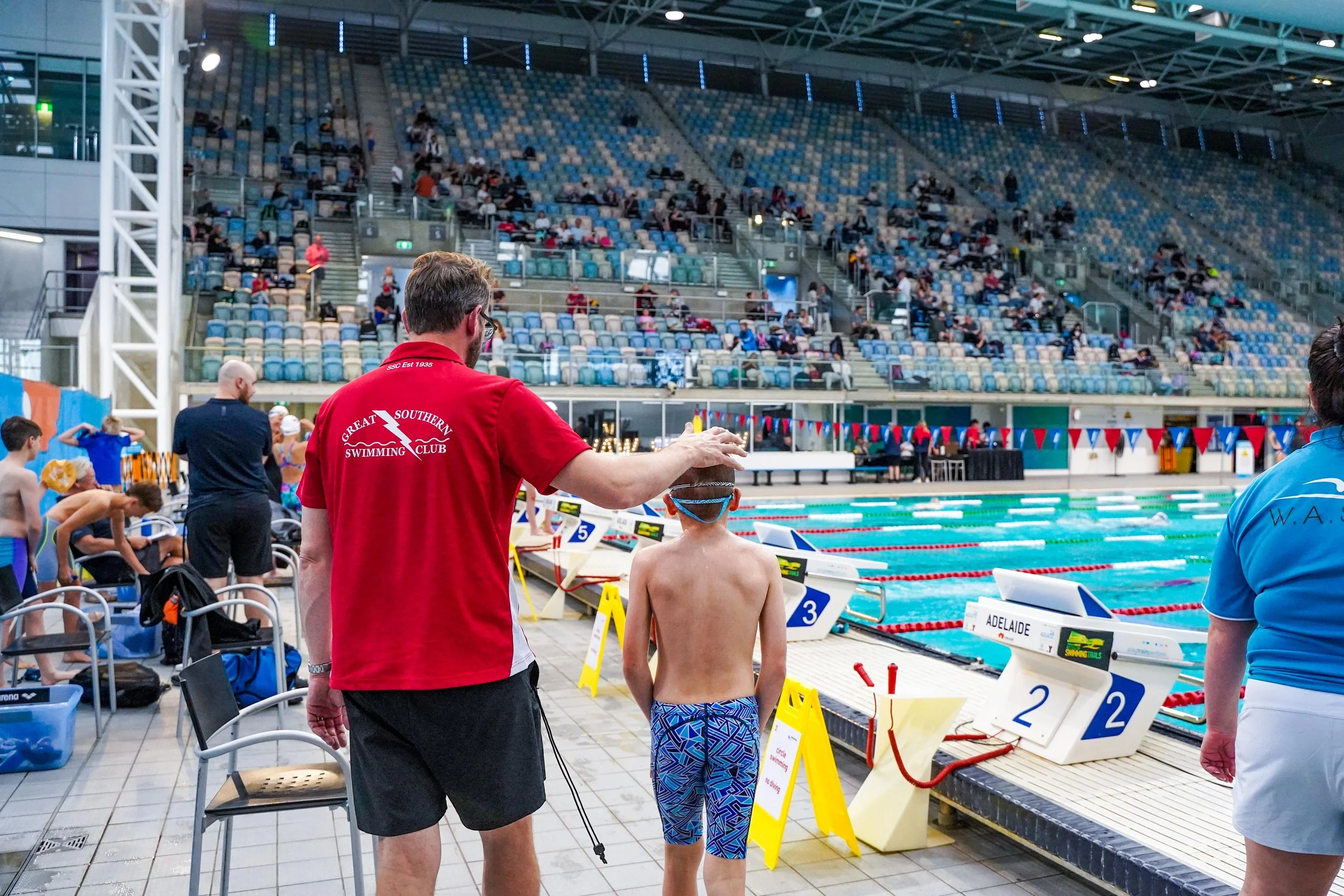
YOUR FIRST SWIM MEET
Swimming competitions can look complicated when you haven’t been to one before. There are events, heats, lanes, marshalling, warm-ups, officials and plenty of terminology.
You are not expected to know all of this before you start.
GSSC coaches, volunteers, families and Committee members will help swimmers and families learn how competition works.
BEFORE ENTERING

TALK TO YOUR COACH
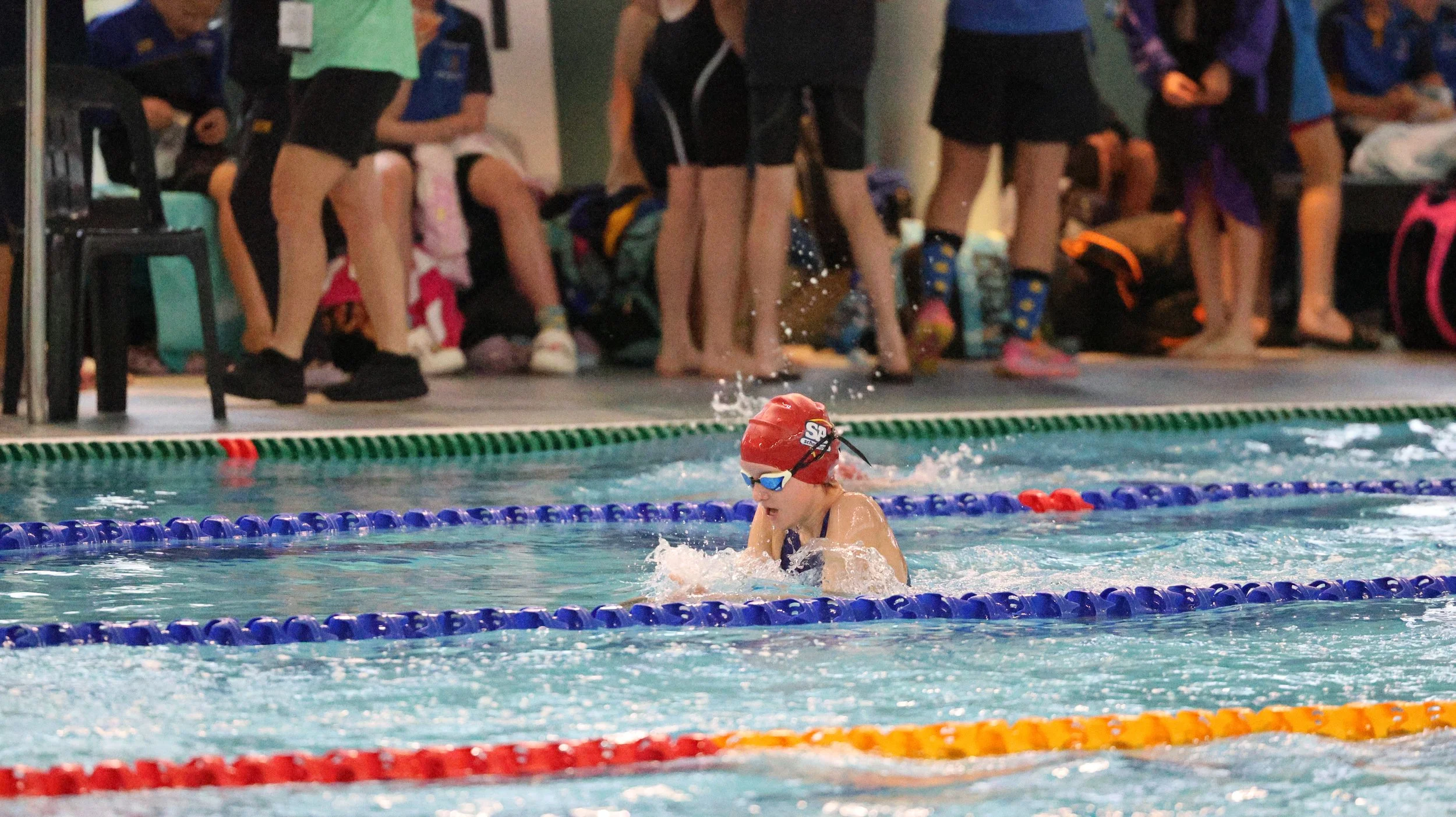
Before entering a meet, check that the competition and events are appropriate for your swimmer.
Particularly for newer swimmers, the aim is to build confidence and experience across a range of strokes and distances rather than chase qualifying times too early.
Swimming Australia’s Foundation framework describes early competition as an introduction to competitive swimming with an emphasis on enjoyment of competing.

ENTER THROUGH SWIM CENTRAL
All sanctioned competitions are entered through Swim Central.
The meet information will show:
available events
age requirements
entry fees
qualifying requirements, if any
entry closing date.

WHAT HAPPENS ON THE DAY?
This would look good as six horizontal stages.
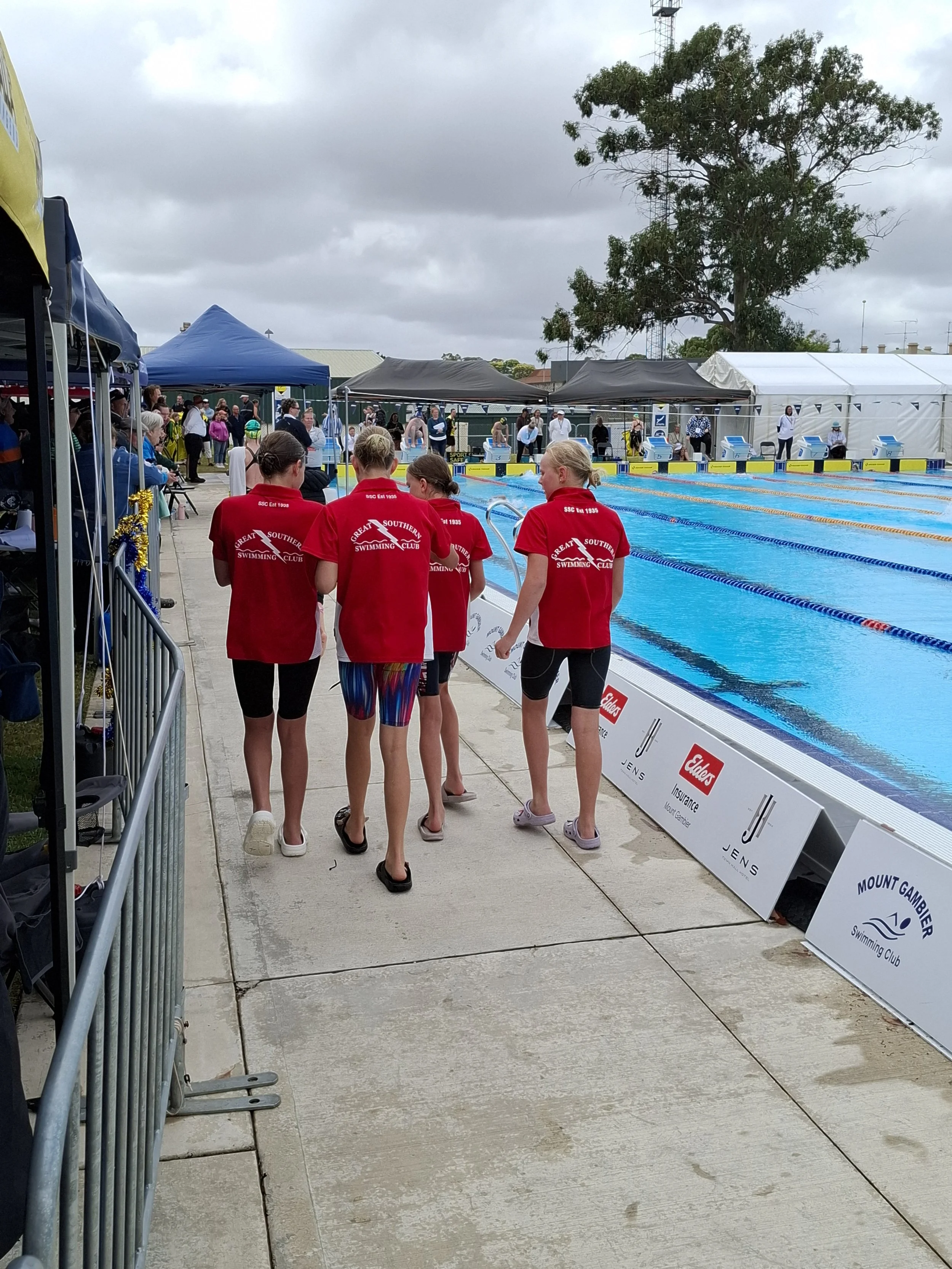
ARRIVE - Allow plenty of time to find the team, get settled and be ready for warm-up.
WARM UP - Swimmers warm up with the Club according to coach and Team Manager instructions.
GET READY - Keep track of upcoming events and make sure the swimmer has what they need.
MARSHAL - At meets using marshalling, swimmers report to the designated area before their race and are organised into heats and lanes.
RACE - Listen to officials, race hard and focus on applying the skills developed in training.
CHECK IN WITH YOUR COACH - Where a GSSC coach is attending, swimmers should speak with their coach after racing for feedback before returning to the team area.
WHAT SHOULD SWIMMERS BRING?
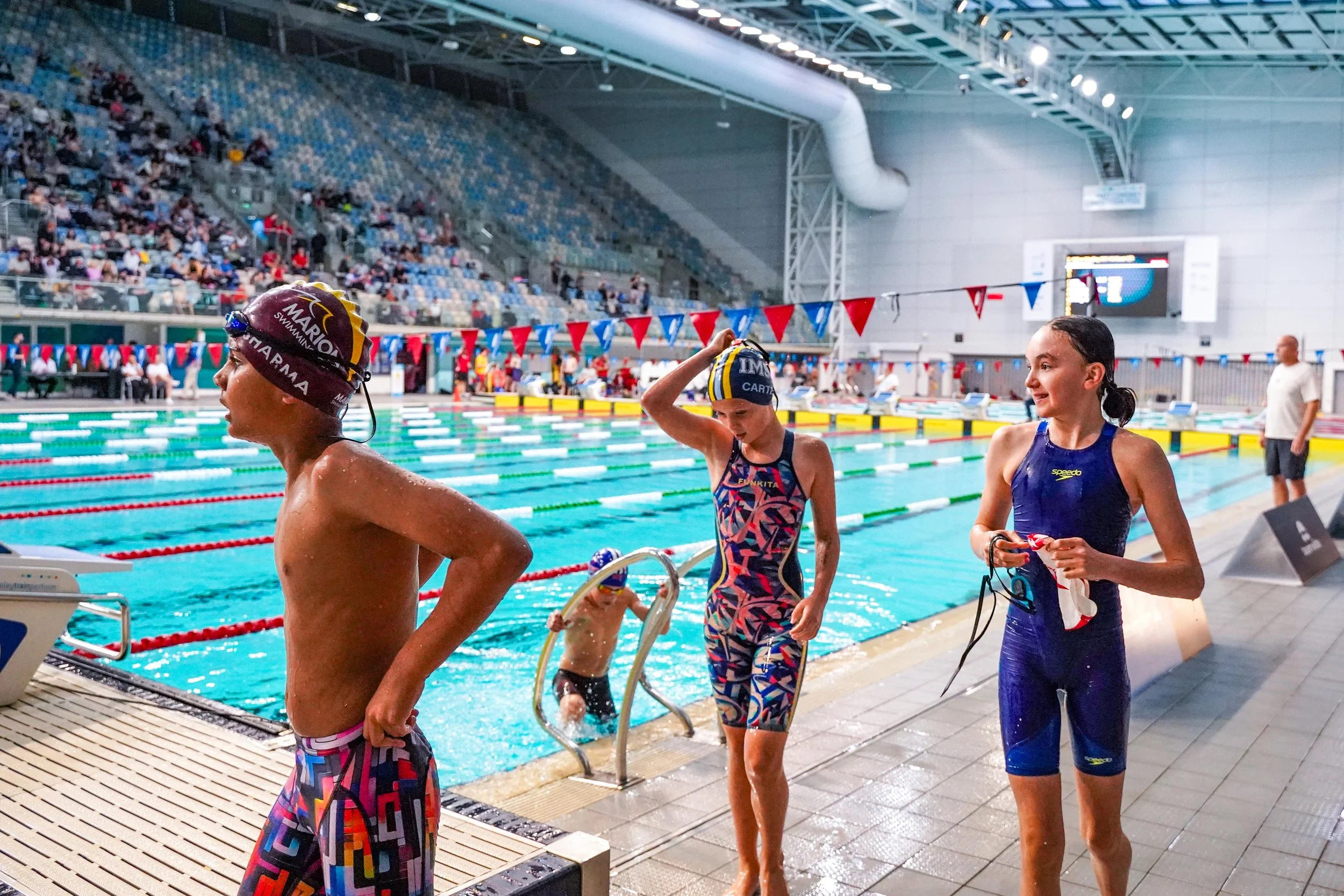
GSSC competition uniform where required
bathers
goggles plus a spare pair
caps
towels
drink bottle
food suitable for the length of the meet
warm clothing between races
any other equipment advised by the coach.
WHAT SHOULD PARENTS DO?
Support the swimmer, help them arrive prepared and allow coaches to manage the technical side of their racing.
At many competitions, GSSC families will also be allocated timekeeping or other volunteer duties. These roles are part of how swimming competitions operate and are shared across participating clubs.
You don’t need previous experience to timekeep, we can show you how.
WHAT SHOULD WE FOCUS ON?
Particularly for developing swimmers:
Good skills. Good decisions. Good effort. Learning from the race.
A PB can be exciting, but a swimmer can also have a very good race without swimming their fastest-ever time.
Competition is one part of development, not the only measure of it.
COMMON SWIMMING TERMS
-
One race within an event where there are more swimmers than available lanes.
-
A particular stroke and distance, such as 50m freestyle.
-
Personal best — the swimmer’s fastest recorded time in that event.
-
A swimmer may be disqualified where a technical swimming rule has not been followed. This is also part of learning to race.
-
The process used to organise swimmers before their event.
-
A performance standard required to enter some higher-level competitions.
-
Systems commonly used to view event programs and results during competitions.