
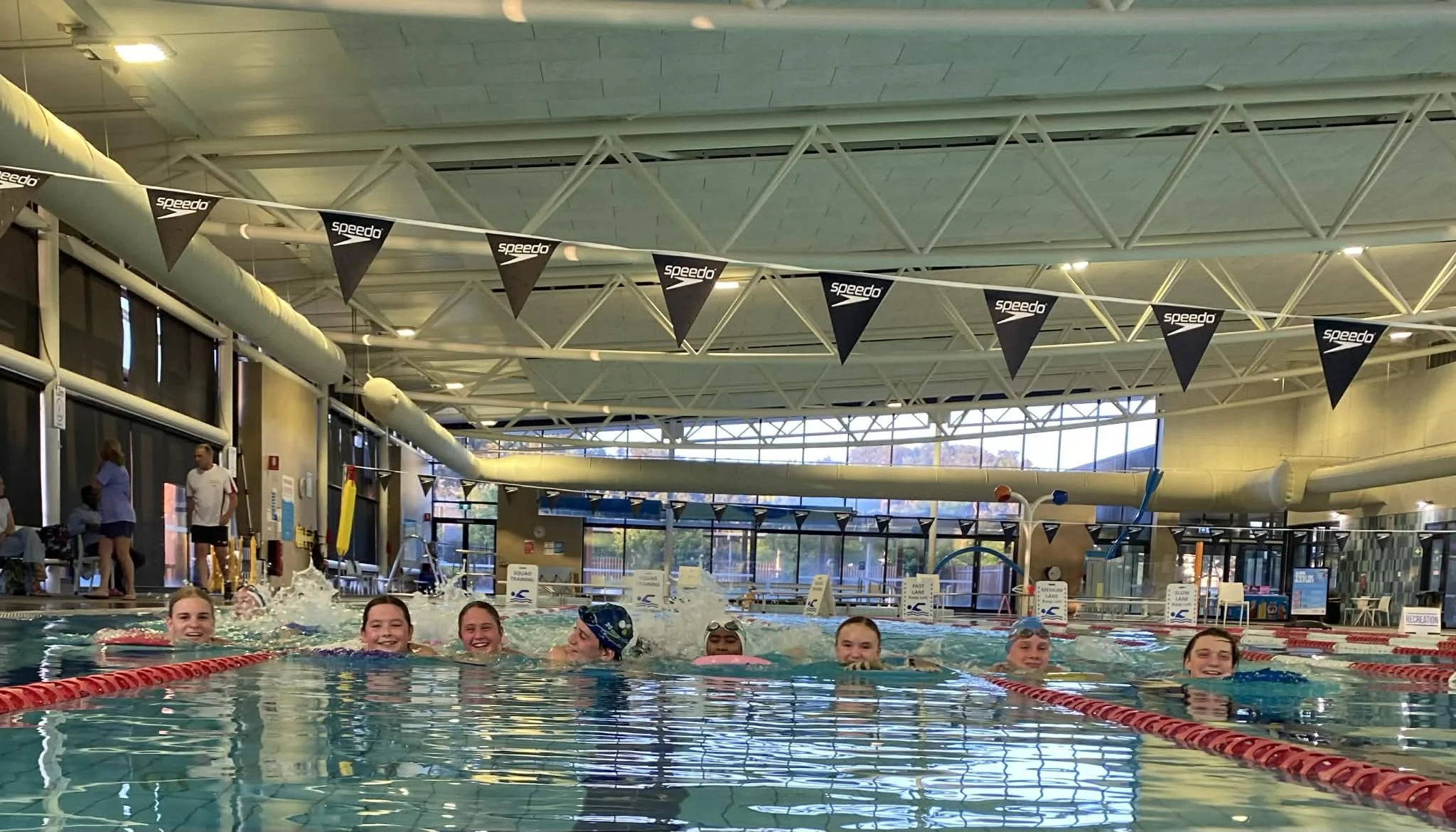
NEW TO CLUB SWIMMING?
You don’t need to know how it all works before you start.
Swimming clubs can seem complicated from the outside — squads, meets, qualifying times, Swim Central, marshalling, officials and plenty of swimming terminology.
Most swimmers and families learn these things as they go. At GSSC, we’ll help you understand what you need to know, when you need to know it.
WHERE DOES CLUB SWIMMING FIT?
Most children begin with learn-to-swim, where they develop water confidence, safety skills and the foundations of freestyle, backstroke, breaststroke and butterfly.
At the Fleurieu Aquatic Centre, BlueFit Swimming provides learn-to-swim programs for children progressing through these stages.
There is no need to rush from learn-to-swim into club training. For many swimmers, spending longer developing sound technique, confidence and endurance in a learn-to-swim environment provides an excellent foundation for the next stage.
WHEN MIGHT GSSC BE THE NEXT STEP?
GSSC welcomes swimmers from 7 years of age, but age alone does not determine readiness.
Club swimming is generally the next step when a swimmer has developed solid swimming foundations and is ready to move from lessons into a coached group training environment.
As a guide, swimmers considering GSSC Junior should be able to:
comfortably swim 25 metres of freestyle and backstroke
swim breaststroke with developing technique
demonstrate basic butterfly or dolphin-kick skills
swim confidently in deep water
complete repeated lengths with appropriate rests
follow coach instructions and train safely with others in a shared lane.
These are a guide rather than a test. Swimmers develop at different rates, and our coaches will help determine whether GSSC is the right next step.
Not quite ready yet?
Continuing with BlueFit’s school-aged learn-to-swim program may be the best way to keep developing strong swimming foundations before moving into club training.
WHAT IS CLUB SWIMMING?
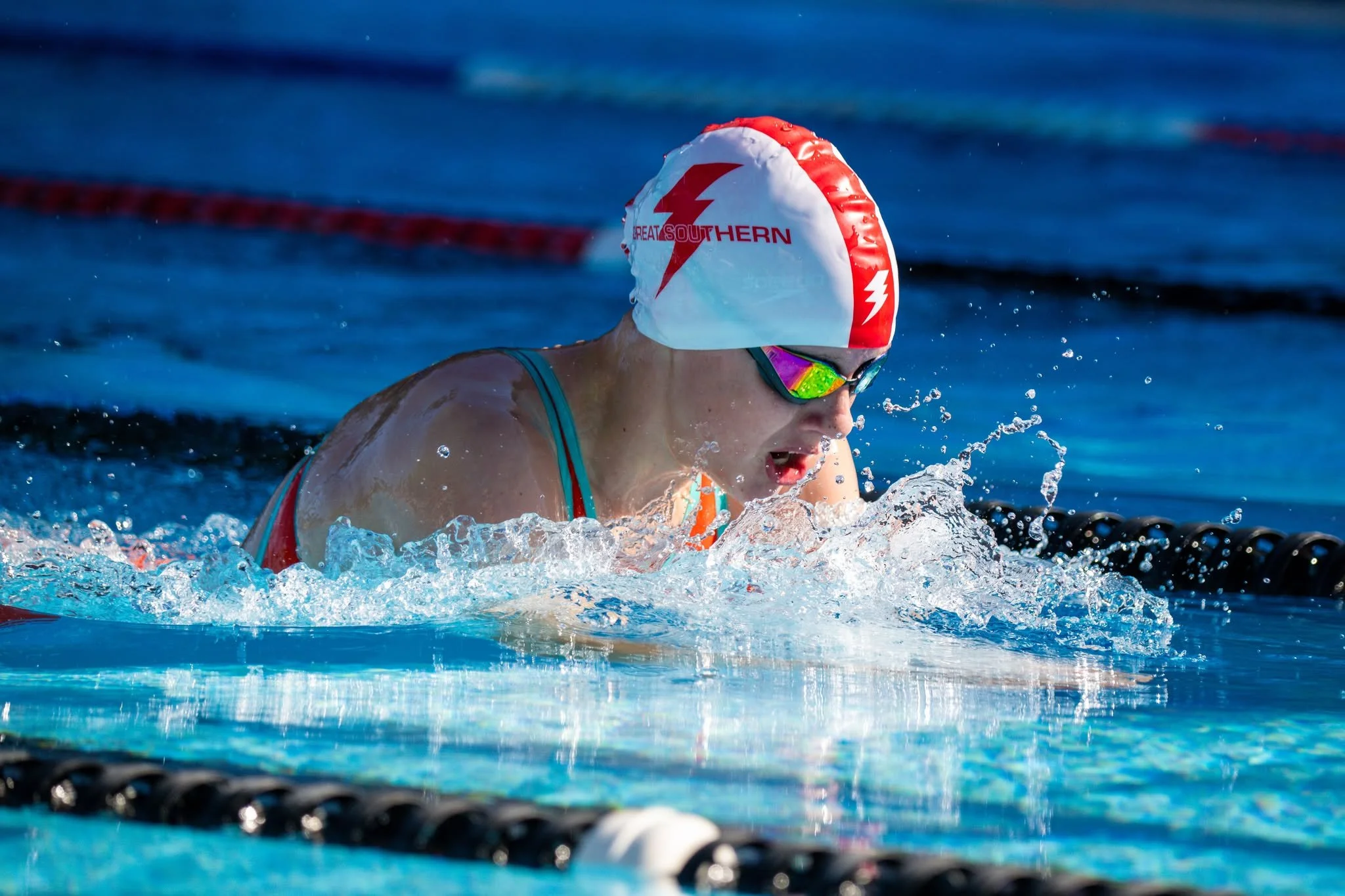
Club swimming builds on the skills swimmers have developed through learn-to-swim.
At GSSC, swimmers participate in structured coached training, continue developing their technique and fitness, learn how to train with others and have opportunities to experience racing and represent their Club.
For some swimmers, that pathway may eventually include State or National competition. For others, success may mean continuing to improve, enjoying racing, building confidence and staying involved in swimming.
WHAT DOES TRAINING LOOK LIKE?
Club training builds on learn-to-swim foundations through structured, progressive squad sessions.
Swimmers train with others at a similar stage of development and learn how to follow a coach-led program, use the lane safely and effectively, and take increasing responsibility for their own swimming.
Depending on the swimmer’s stage, training focuses on:
Technique
Efficient skills across all four strokes, including body position, breathing and stroke mechanics.Starts, turns and underwater skills
Progressive development of the skills used to start, turn and finish effectively.Training skills
Following sets, understanding pacing and rest, using the lane well and training effectively with others.Fitness and capacity
Developing endurance, speed and the ability to maintain good technique as training demands increase.Racing skills
Learning pacing, race preparation and how to apply training skills in competition.Confidence and independence
Responding to feedback, understanding their own swimming and taking increasing responsibility for training and preparation.
Strong technique remains important at every stage. Training simply becomes progressively more challenging as the swimmer develops.
WHAT FAMILIES CAN EXPECT
Training is coach-led. Parents and carers support swimmers by helping them arrive ready to train, encouraging consistent attendance and allowing coaches to provide technical direction on pool deck.